Our Blog


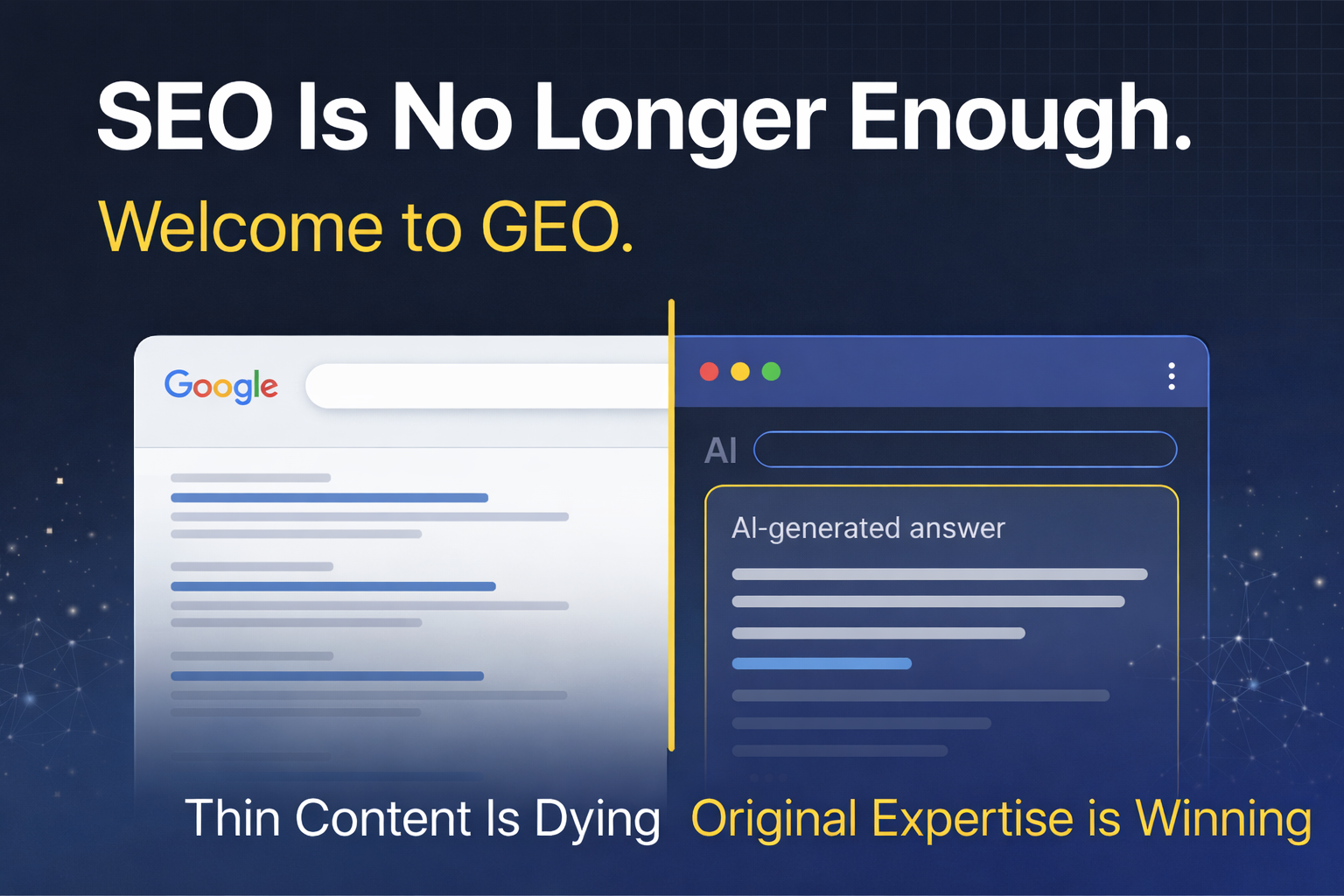
As AI systems answer more questions directly, being cited in an AI's response may matter more than ranking first on Google.
Generative Engine Optimization (GEO) is the practice of optimizing
your content so it
gets
cited, surfaced, or summarized by AI systems like ChatGPT, Google’s AI Overviews,
Perplexity,
Claude, and similar large language model (LLM)-powered tools.
Where traditional SEO (Search Engine Optimization) focused on ranking high in a list of
blue
links, GEO focuses on becoming the source that AI systems trust, quote, and reference
when
generating answers.
SEO = Getting to the top of a results page.
GEO = Getting inside the AI's answer itself.
The numbers are staggering. AI-powered search is growing at a pace that’s disrupting decade- old assumptions about web traffic:
If your content isn’t structured for AI consumption, you’re invisible to a fast-growing share of information seekers - even if you rank #1 on Google.
| Dimension | SEO | GEO |
|---|---|---|
| Goal | Rank in search results | Be cited in AI answers |
| Audience | Search engine crawlers | LLM training & retrieval systems |
| Key signals | Backlinks, keywords, page speed | Authority, clarity, structure, citations |
| Content style | Keyword-optimized | Factual, well-cited, conversational |
| Metrics | Rankings, impressions, CTR | Mentions in AI outputs, brand visibility |
| Time horizon | Weeks to months | Ongoing, compounding |
1. Authority and Trustworthiness
AI systems prioritize sources that are widely cited, linked by authoritative
domains, and
consistent over time. Include author bios with credentials, cite sources, and build
backlinks
from respected institutions.
2. Clear, Structured Content
LLMs parse content differently than humans do. Organized headings, plain language,
bullet
points, and direct answers perform well. Answer questions directly and early - don’t
bury the
key insight – lead with it.
3. Original Research and Data
Being the original source of a fact or study is one of the fastest paths to AI
citation. Publish
original surveys, coin industry terms, and share proprietary data.
4. Topical Depth and Coverage
Ten deeply researched articles outperform a hundred shallow ones. Build topic
clusters,
answer related questions, and go beyond surface-level takes.
5. Schema Markup and Technical Structure
Wikipedia, Wikidata, LinkedIn, Google’s Knowledge Graph, Crunchbase - AI
Structured data signals to AI what kind of content it's reading. Implement FAQ,
Article, and
How To schema. Keep HTML clean and metadata accurate.
6. Brand Mentions Across the Web
AI builds a picture of your brand from Wikipedia, industry publications, reputable
blogs, and
social signals - not just your own site. Pursue earned media consistently.
Use this to evaluate your content’s GEO-readiness:
"The brands that invest in authority, depth, and trust today are positioning themselves to win the AI-driven web of tomorrow."
